Celebrating Local Leaders in Sustainability
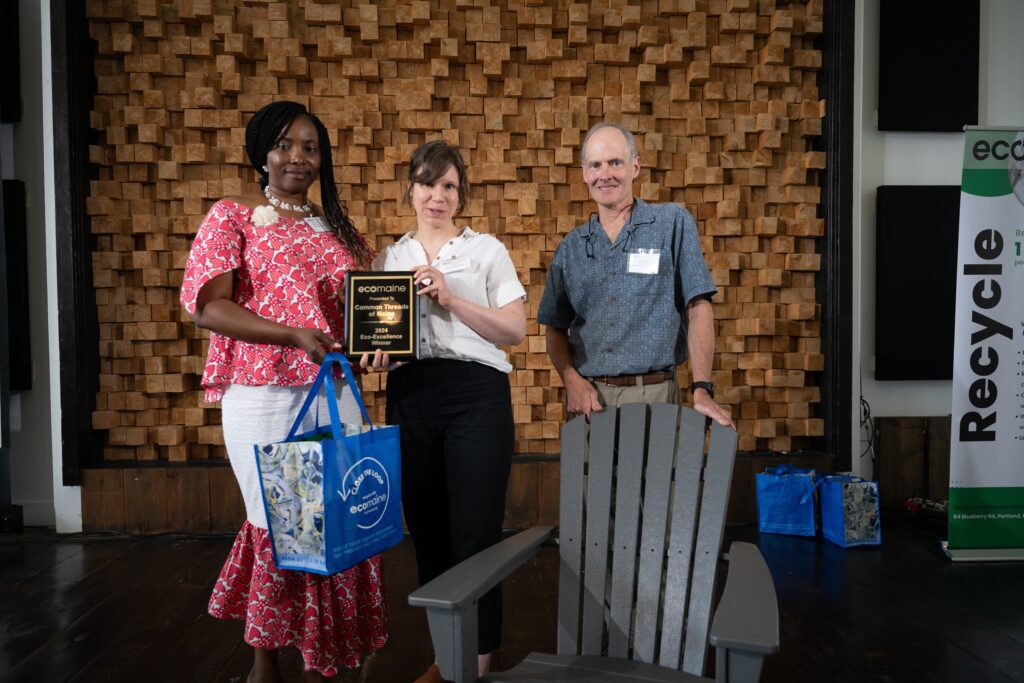
ecomaine proudly recognizes champions of sustainability across our communities through the annual ecomaine eco-Excellence Awards.
To be eligible, nominees must be located in or serve one of ecomaine’s member communities.
Eligible nominees may include businesses, multi-family housing leaders, nonprofits, municipalities or municipal staff, and individuals. Award recipients are carefully selected based on the effectiveness of their efforts, their ability to raise awareness, their positive community impact, and the potential for their initiatives to be replicated elsewhere. Preference is given to projects and programs focused on waste reduction, recycling, composting, and related sustainability efforts.
While nominations will open in early 2026 and selection will take place in the spring, we encourage you to start thinking about the eco-heroes in your city or town at any time. We are eager to celebrate the people who are leading the way on sustainability in Maine!
Our 2025 Award Winners
While ecomaine is the end of the line for our waste, there are heroes in our communities who are making an impact further up the waste hierarchy – finding innovative ways to use less, recycle, repurpose and reduce our waste and create a more sustainable future for Maine. This year we are proud to recognize six champions of sustainability.
Category: Individual
Winner: Maya Faulstich
While still a student at Yarmouth High School, Maya has served on the town’s Climate Action Plan Committee, spoken to the town council on climate issues, and serves in the Environmental Action Club. One of her most impressive achievements: founding “Dishes on Demand” – this lending program for reusable dishware has diverted more than 5,000 single-use items from the waste stream.

Category: Business
Winner: Wicked Clean Bins
Everyone contends with dirty waste bins, but many people don’t consider the potential impact of cleaning those bins, and what traditional cleaning can send into our groundwater and local water sources. Wicked Clean Bins has risen to the challenge. With an innovative cleaning process that uses less water than a garden hose and eco-friendly cleaning agents, they’ve found a smart, sustainable solution to a common problem.

Category: Non-Profit
Winner: Casco Bay Lines
Public transportation is a huge win for sustainability – and in Maine, public transit isn’t just on land, it’s on the water as well. Casco Bay Lines transports more than a million passengers each year, and they commit to sustainability in ways large and small: recycling bulbs and batteries, to piloting a program to reduce and recycle shrink wrap from cargo, to their plans to introduce New England’s first hybrid electric ferry this year.
Category: Group
Winner: South Portland Waste Reduction Committee Repair Fair
There are many individuals in our communities who are eager to move away from disposable culture, and who would like to retain and reuse items rather than replace them – but may not have the skills to repair. In January, the South Portland Waste Reduction Committee met this need with their Repair Fair. They staffed six different repair stations with volunteers with a wide range of skills sets, and community members got help repairing everything from lamps to electronics, clothing to furniture. The one-day event kept nearly 100 items out of our waste stream.

Category: Multi-Family Housing Leader
Winner: M&R Development
The group responsible for The Downs in Scarborough has transformed a Maine landmark into thoughtful mixed-use development, including over 2,000 units of housing, always with sustainability in mind. They’ve donated over 200 acres to the Scarborough Land Trust, are building more than 10 miles of recreational trails, and are investing in traffic management, stormwater restoration and expansion of public transit to meet the needs of the community in the 21st century and beyond.

Category: Grand Winner
Winner: Ripe for Repair Team
Since 2023, Ripe for Repair meetups have invited people from all over greater Portland to bring what’s broken, and learn how to fix it, together. The meetups are informal and inviting, moving to different locations throughout the area to welcome as many people as possible. They’re an opportunity for hands-on learning; the participants come away not just with a one fixed item, but with the ability repair more and replace less going forward. As one Ripe for Repair nomination noted, the participants aren’t just building new skills, they’re also building community – and community is a vital ingredient in sustainability as well.


