
At ecomaine, we believe that lasting change happens at the community level, in classrooms, cafeterias, school gardens, and hallways. That’s why our School Waste Diversion Grant Program exists: to put real resources behind the students & educators who are already showing up for a more sustainable Maine. This spring, we’re visiting all of this year’s grant recipients, and what we’re seeing across the region is genuinely exciting. Here’s an update on the progress these students and educators have made so far.
About the ecomaine School Waste Diversion Grant Program
Each year, ecomaine invites organizations, schools, and community groups within our member communities to apply for School Waste Diversion Grants ranging from $250 to $5,000. These aren’t one-size-fits-all awards. Each application is reviewed based on its potential for meaningful environmental impact, the creativity of its approach, and its connection to the communities we serve across Maine. From reducing single-use waste to building composting infrastructure to reimagining how students interact with recycling, the projects we fund reflect the diversity and ingenuity of the people doing this work.
This cycle, we’re proud to be supporting ten recipients across our member communities, each tackling sustainability from a different angle, and each making measurable progress at the midyear mark.
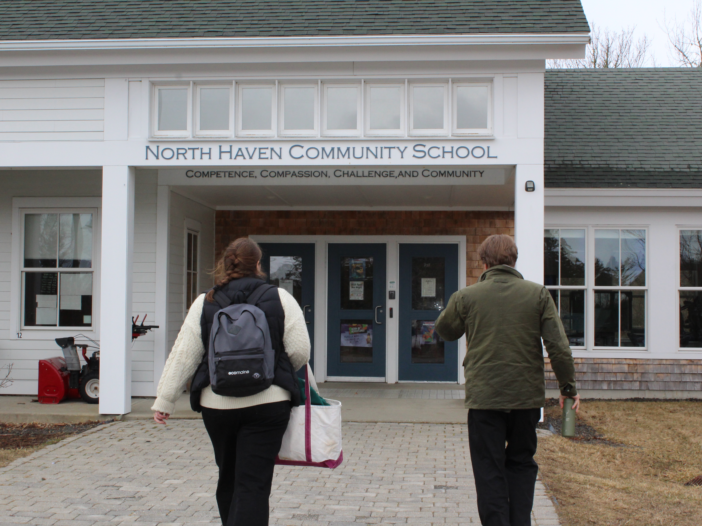
A Special Visit: North Haven Community School
Of all the check-ins on our calendar this season, the trip out to North Haven Community School was one that stood out in a special way. Getting to an island requires intention, and so does what this school is building.
North Haven received a School Waste Diversion Grant to establish a formal Green Recycling Team and develop a comprehensive sustainability program, with the ultimate goal of hosting a community Green Fair. When we arrived, it was immediately clear that the work had already taken root.
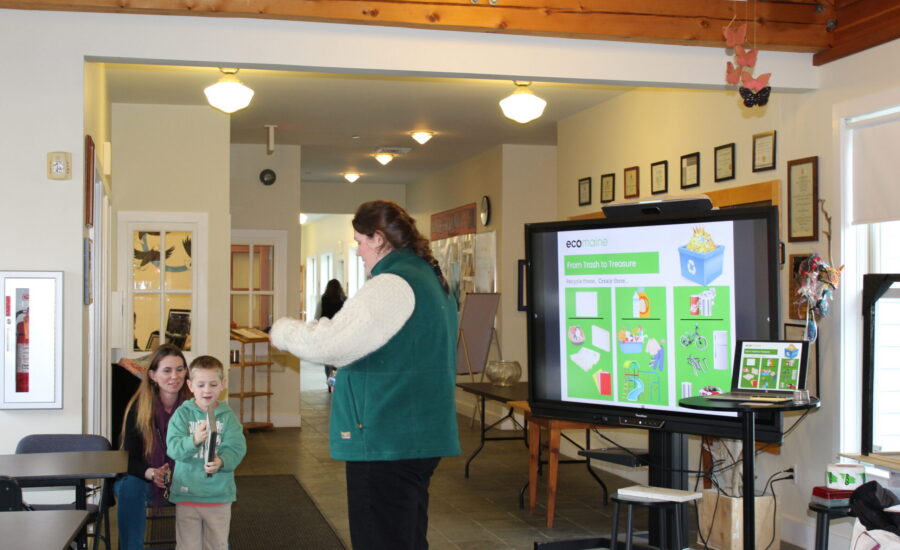
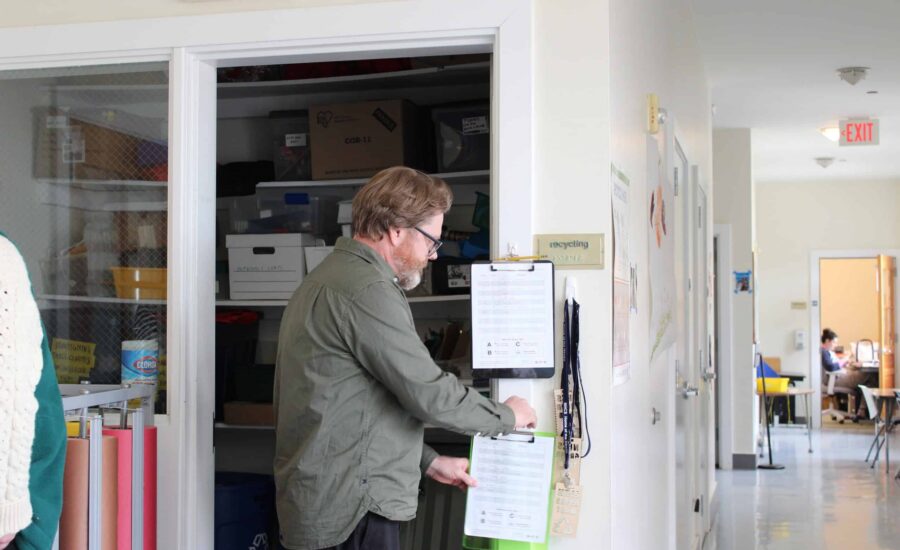
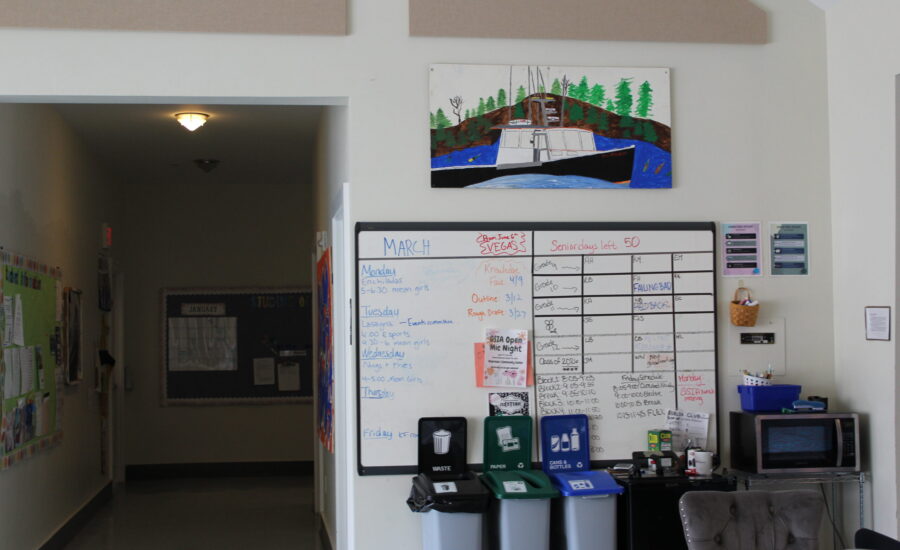
The centerpiece of their grant project is the NHCS Green Team, a student-led group that has taken real, visible ownership of recycling at the school. Students wear their Green Team lanyards with pride as they move through the building conducting formal waste bin audits, using rating charts to assess contamination levels in classrooms and report back on how well their peers are sorting waste. The school has a dedicated recycling room that serves as the operational hub for this whole effort. During our visit, we gave a presentation on recycling to one of the classes and got to spend time with a few of the Green Team members themselves, kids who are engaged, informed, and genuinely enthusiastic about the responsibility they’ve taken on.
What struck us just as much, though, was everything happening beyond the grant project. North Haven Community School is running one of the most holistic sustainability programs we’ve encountered at any school, of any size. The campus includes a working garden with a full composting system where students and teachers bring organic waste from across the school. A greenhouse extends that learning further, deepening students’ understanding of growing, composting, and where food comes from. And a remarkable workshop space brings together woodworking, traditional boatbuilding, and a modern 3D printing and robotics lab, connecting students to both timeless trades and emerging technologies.
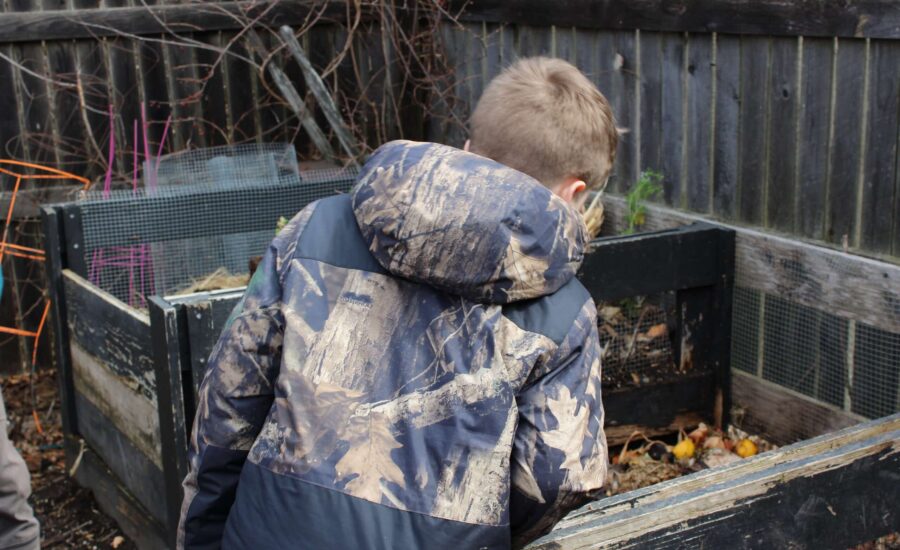
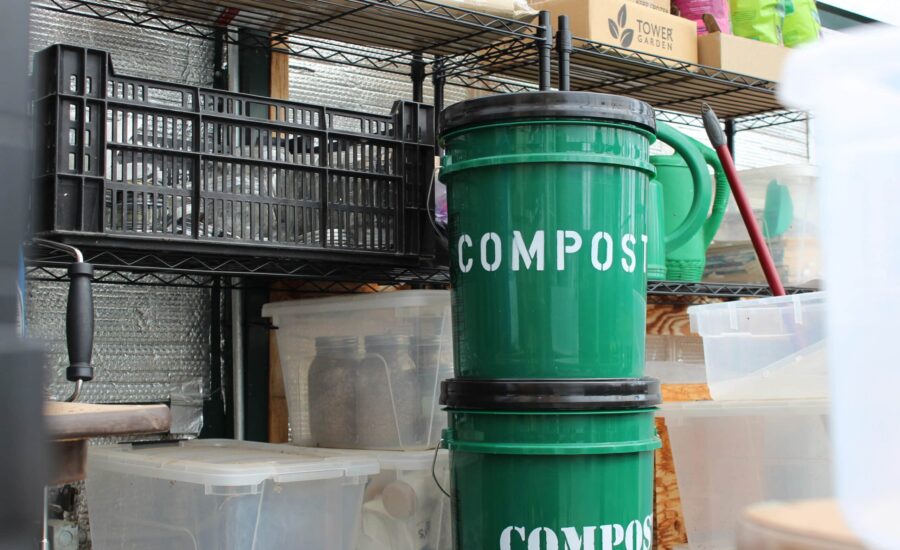
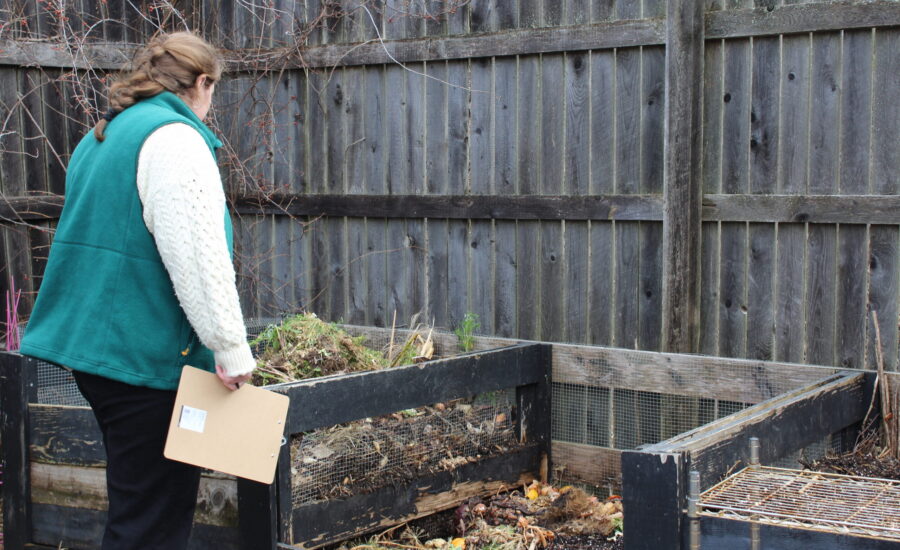
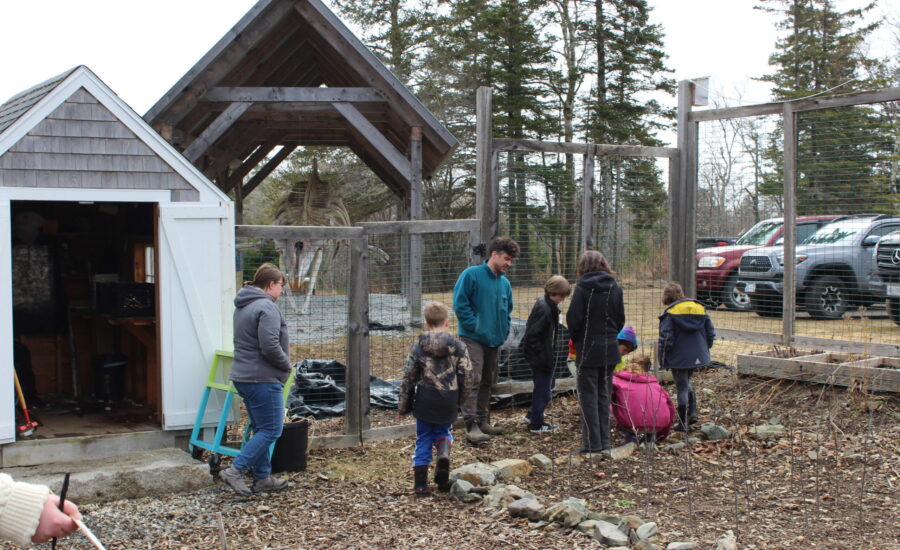
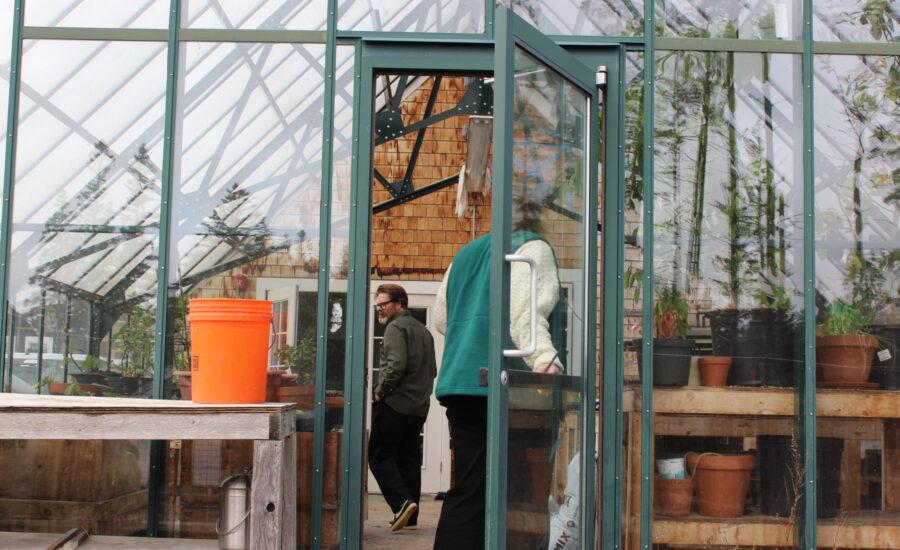
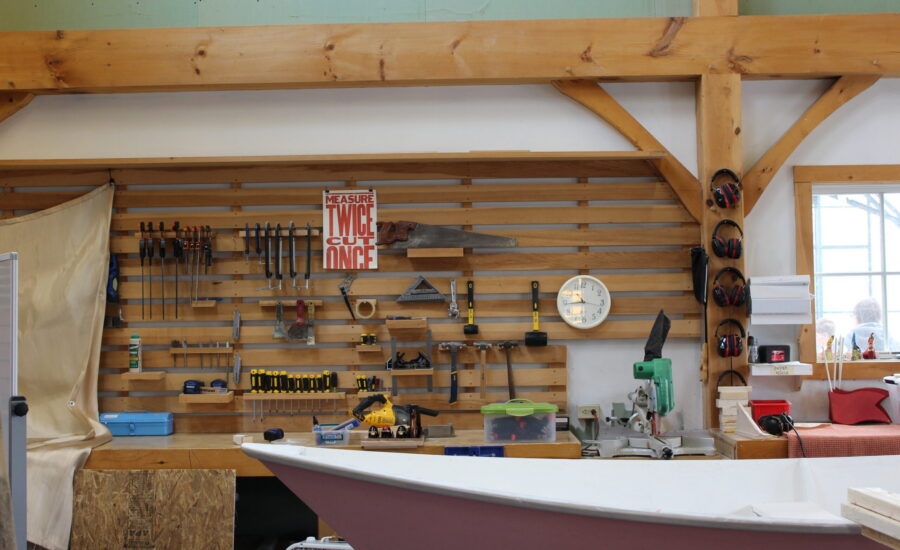
North Haven has received the first half of their School Waste Diversion Grant funding, with the remainder to follow as the program continues to grow toward the Green Fair. We can’t wait to see what they put together.
Progress & Possibilities: Meeting with our 2025-2026 Grant Recipients
Roots Academy
Roots Academy is using their grant to improve their rain barrel infrastructure, transition to reusable utensils and towels, and install educational signage to reinforce sustainable habits schoolwide. Small shifts, compounded across a whole campus, add up quickly.
Falmouth Middle School Community Service Club
The student-run Community Service Club at Falmouth Middle is expanding waste disposal capacity, tackling outdoor litter on school grounds, and planning an upcycling event to engage the broader school community. This is student leadership in action.
Strive PSL TOPS
Strive PSL TOPS is building out a composting program from the ground up, complete with raised garden beds and educational programming to help participants understand the full cycle of organic waste. A project with deep roots in both sustainability and community wellness.
Dayton Consolidated School
In Dayton, the school is introducing composting alongside compostable plasticware for their cafeteria, a practical and impactful shift that reduces landfill-bound waste from one of the highest-use areas of any school building.
Appletree School
Appletree School is stocking up on refillable materials, eco-friendly classroom supplies, and reusable cups, a straightforward but meaningful move away from single-use products throughout daily school life.
Greely Middle School
Greely Middle is taking a targeted approach, installing high-efficiency hand-drying units in high-traffic adult bathrooms to dramatically reduce paper towel waste. It’s a smart, data-informed intervention focused on one of the most overlooked sources of everyday waste in school buildings.
Freeport High School
Freeport High is investing in reusable utensils, sustainable cleaning supplies, and proper storage solutions, building the infrastructure needed to make reusability the default, not the exception.
Harrison Lyseth Elementary School
Harrison Lyseth is installing rain barrels, bringing water conservation education to life in a hands-on way for their Portland students. Connecting kids to natural systems, even in an urban setting, matters.
Loranger Memorial School
Loranger is transitioning their cafeteria to compostable materials, reducing the volume of conventional waste generated every single school day. For a busy school cafeteria, the impact over a full academic year is significant.
Why This Work Matters
Taken together, these ten projects represent something larger than any one school or grant. They represent a growing network of Maine communities that are choosing to do things differently, to teach the next generation that sustainability isn’t an abstract idea, but a daily practice.
At ecomaine, we process waste for over 70 member communities across Maine & New Hampshire. We see, every single day, the real impact that education and intentional habits have on what moves through our facilities. And we know that the habits formed in classrooms, cafeterias, and school gardens today are the habits that will shape how our communities handle waste for decades to come.
That’s why we invest in programs like these. Because the students showing up, sorting waste, building gardens, and leading their peers are doing more than reducing waste today. They’re building the knowledge, the habits, and the resilience that will power the next generation of environmental stewardship across our communities, and across Maine.
We’re proud of every one of our School Waste Diversion Grant recipients this cycle. Stay tuned for a full wrap-up as these programs hit their finish lines later this year.
Interested in applying for an ecomaine School Waste Diversion Grant? Visit ecomaine.org/grants/ to learn more and keep an eye out for upcoming application cycles.
