
Did you know?
It’s estimated that about 1/3 of global food supply goes uneaten every year. That’s roughly $1 trillion worth of food, or about one billion meals, every day. In the United States, the figure climbs to about 40% wasted. Here in Maine, that’s about 361,000 tons per year.
In other words, imagine every person across the state leaving one out of three grocery bags of food in the parking lot after every grocery trip and not returning. Yikes.
Why does it matter?
Food systems are a huge environmental problem.
Growing and processing the food we eat requires a significant number of natural resources – about 72% of global freshwater use, and more land surface than any other human activity on Earth at a whopping 36% (to put that in perspective, all the cities and suburbs on the planet combined occupy less than 1%).
When looking at the entire lifecycle of everything we eat (and don’t eat) – from clearing land, growing and processing crops and livestock, transportation, packaging, cooking, refrigeration, and waste – our food systems are responsible for about 1/3 of global greenhouse gas emissions (or about 1/3 of the climate problem). Wasted food alone is responsible for half of the total emissions produced from our food systems, and others an estimated 8-10% of global emissions (which is significant!)
People are hungry.
Beyond the environmental impacts, Maine has a higher rate of food insecurity than any other New England state, with 1 in 7 adults and 1 in 5 children going without meals, which roughly matches the national average. We throw out enough food to feed those people four times over.
Hunger is not an issue of food scarcity; it’s a symptom of an inefficient system.
Wasted food is a big “dill”
Reducing food loss and waste has been designated as one of Project Drawdown’s most urgent solutions for combatting climate change, because wasting food squanders all the extensive energy and natural resources used at every stage of the food cycle.
While food waste can happen in many ways, across the United States – and Maine – food is one of the most common materials that ends up in the trash. For ecomaine communities, this is a problem – food waste is wet, heavy, hard to burn, and inefficient for our waste-to-energy process. Communities that don’t send their trash to a waste-to-energy facility rely on landfilling, where space is dwindling and organics (like food and yard debris) take up a lot of room.
Why? Landfills have almost no oxygen, and the microbes that break down organics in these spaces work very, very slowly. Not only that, but they also release methane in the process – a greenhouse gas that’s roughly 80 times more potent than CO2 at trapping heat in our atmosphere over a 20 year period and a leading driver of climate change.
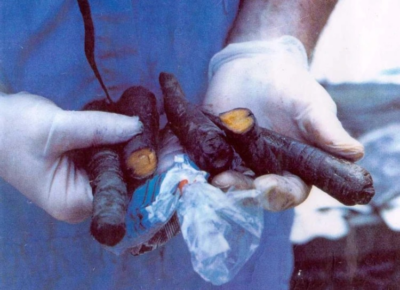
Methane is a huge problem. To paint a bigger picture – in the United States alone, landfills are the third largest source of methane emissions, and food is estimated to be responsible for about 60% of those emissions.
Gulp.
And even when food stays out of the trash, composting or anaerobically digesting perfectly edible food isn’t the best way to honor the energy and natural resources that went into it. Soil amendments and energy recovery are great, but preventing wasted food in the first place – producing, buying, and serving only what we need – should be the top priority. It cuts down on overproduction and has the greatest environmental and economic payoff (and who doesn’t like saving money?).

It’s not all bad news
While food is lost at all steps in the supply chain, and the environmental impacts are huge, in Maine, households are responsible for the majority of food waste, over farms and even grocery stores.
That might sound like bad news, but it actually means that we have the biggest ability to learn and begin making a difference, right in our own residences and communities.
Enough about numbers.
What is Food Waste Prevention Week?
Since 2021, Food Waste Prevention Week has been celebrated each year across the United States to build awareness and inspire action on reducing wasted food. Traditionally celebrated in April, it was moved to the end of September this year to co-align with the International Day of Awareness of Food Loss and Waste, and the year’s theme is “Food Heroes in Your Neighborhood.” To echo national efforts, Governor Janet Mills has proclaimed Maine Wasted Food Awareness Week since 2024.
We’re celebrating this week by sharing simple, actionable steps and resources to help you get started.
Solutions to reducing wasted food at home
Planning goes a long way
Planning doesn’t mean spending hours with a cookbook. Taking a few minutes to shop your fridge first, building a grocery list based around you already have, and planning meals with ingredients that are reaching peak ripeness can go a long way.
Creating a routine for days of the week right before your shopping trip to use leftovers, like “stir-Fridays” can make planning easier and grocery trips more efficient. Stir fries are flexible, creative, and fun, and can be made with just about anything.
Shopping
Don’t grocery shop hungry! We’ve all been there (9 times out of 10, you will buy too much and regret it). Stick to your list, and your wallet will thank you later.
When shopping, you can make a difference by buying fresh ingredients in smaller amounts, choosing loose and bulk ingredients over pre-packaged ones, and opting for “ugly” produce (this helps cut down on food that would be wasted by the store).
Smart storage
Going on vacation, prepping large meals in advance, or having a lot of extras to store? Your freezer is like a massive “pause” button for cooked leftovers, butter, milk, bread, yogurt, cheese, and more.
Having a full freezer will also help the appliance run more efficiently.
When it comes to your refrigerator, parts of the unit are designed to keep certain foods fresh longer. For example, the door is the warmest place (you should never store milk there), and the lower back shelf is the coolest (a great spot for raw meat and dairy). Crisper drawers help regulate humidity, and some can even be adjusted, which is wonderful for most fruits and vegetables, especially delicate ones like lettuce, which wilts quickly (if this happens, try reviving it in a bowl of cold water). Heads up: some produce doesn’t belong in the fridge at all, like basil and other fresh herbs.
Check out this interactive website to learn all about the ins and outs of proper food storage, and this resource for mapping out how to best organize and store refrigerated foods.
Preparing and cooking
Did you know? Uneaten and spoiled leftovers are the number one source of wasted food in homes. It’s not the inedible parts like ends, stems, peels, and pits, but perfectly edible food that was forgotten about, improperly stored, or went uneaten because we got bored.
Ouch.
Outside of freezing leftovers in airtight containers, there are endless ways to get creative with partially used vegetables, large meat roasts, and more. From stir fries, to frittatas, to soups, fried rice, and pickles, the opportunities are wide open. Some people even enjoy “upcycling” foods that would otherwise be inedible.
Not the creative type? That’s even better, because there are loads of people out there that are excited to share their creations with the world. Check out these resources for inspiration:
https://www.lovefoodhatewaste.com/foods-and-recipes
https://zerowastechef.com/zero-waste-chef-cookbook/
https://www.wcrf.org/living-well/eating-well/leftovers-recipes/
The truth on date labels
Food date labels don’t mean what you think. Except for baby formula, in the United States date labels indicate peak quality in freshness, not food safety, which leads to a lot of consumer confusion and unnecessary tossing.
Canned beans, soups, and veggies, for example, remain safe indefinitely as long as the cans aren’t dented, rusted, or bulging.
The USDA has great resources on learning about date labeling, and how to trust your senses on whether a food has gone bad. When in doubt about the label, DON’T throw it out!
Solutions for reducing wasted food in your community
While reducing waste starts in the home, it takes a village to make changes across a community.
Food Rescue Maine, a research team based out of the UMaine Mitchell Center, works to connect major food businesses such as retailers, distributors, farmers, hospitality groups, charitable food providers, schools, and more with education and tools for preventing wasted food. Learn about their work and Maine’s “big six” food waste solutions here and their resources for educators here (including a toolkit for reducing cafeteria waste).
Based out of Southern Maine, Wayside Food Programs works to connect unsellable surplus food from large grocers and farms to soup kitchens, food pantries, and other organizations to help combat hunger and slash food waste. They also work with a handful of housing authorities to provide mobile food delivery to communities where rates of food insecurity are high.
These are only two examples of organizations working to combat food waste, with many more across the state.
Education and awareness start with empowering the next generation
For schools and educators looking to expand project-based learning on reducing wasted food, but have limited budget, funding exists through ecomaine’s eco-Impact Grant. Schools that serve students in an ecomaine community are eligible for up to $7,500, and applications are accepted until October 20th, 2026.
Our team is also available to work with educators in teaching their students about the importance of reducing wasted food through free assemblies and classroom-based programming (in hopes that they’ll go home and teach their parents!).
Other sources of funding for schools and community groups are available through Maine DEP’s Solid Waste Diversion Grant.
Thank you for celebrating Wasted Food Prevention Week!
